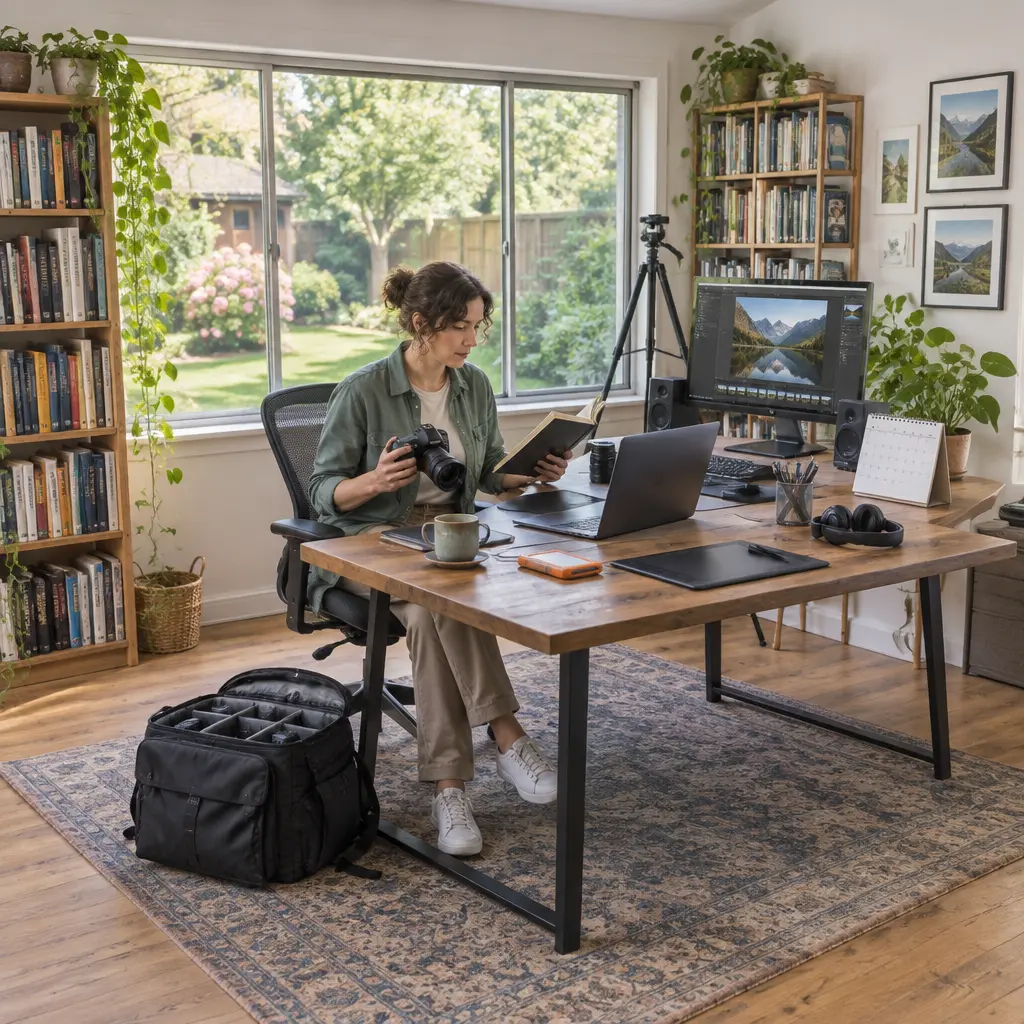
Travel photography accessories are tools that help photographers carry, stabilize, power, protect, and use a camera away from home. The best kit is not the biggest one: it is a compact selection matched to your camera, destination, and shooting style. A comfortable camera strap, a supportive travel tripod, spare batteries and memory cards, weather protection, and a practical carrying system address the most common travel needs. The recommendations below explain what each accessory does, how to choose it, and when it is worth packing—using manufacturer specifications and guidance from organizations such as the Federal Aviation Administration and Leave No Trace.
Camera accessory selection improves travel photography readiness
A camera accessory is a supplementary item that improves a camera’s handling, protection, power supply, storage, or shooting capability. For travel, its value depends on whether it solves a likely problem without adding excessive weight, bulk, or complexity. A spare battery is valuable when charging opportunities are limited; a tripod matters more for night scenes and landscapes than for a fast-moving city tour.
There is no universal accessory checklist because camera systems and trips differ. A compact mirrorless camera, a large telephoto lens, a multi-day hike, and a city break call for different gear. A useful selection rule is to prioritize accessories that prevent a failed shoot, protect expensive equipment, or make a camera comfortable enough to carry and use. Check your camera manual and destination requirements before buying, particularly for batteries, chargers, and support systems.
Camera carrying accessories reduce strain and improve access
Camera carrying accessories are straps, clips, and bags that secure equipment while keeping it accessible. Their practical purpose is to balance comfort, speed, and security. The right choice depends on camera weight, how often you expect to shoot, and whether you will be walking in crowds, hiking, or traveling in wet conditions.
Camera straps provide basic support and quick access
A camera strap connects the camera to your body, reducing the chance of an accidental drop and making the camera easier to reach. A neck strap is simple and often comes with a camera, while a cross-body or sling strap can distribute the load differently and allow the camera to rest at your side. For heavier setups, look for a wide, padded strap and attachment hardware rated for the combined camera-and-lens weight. Check connections regularly; a strap is only protective if its anchors are secure.
Camera clips suit photographers who want hands-free carrying
A camera clip attaches to a backpack strap or belt and holds the camera on a locking plate. It can keep a camera readily available on a hike without requiring it to hang from the neck. Confirm that the clip is compatible with your camera plate and that its locking mechanism is engaged before moving. Clips are less suitable when a camera is exposed to rain, dust, or crowded spaces unless you add suitable protection.
Camera bags protect gear and organize travel essentials
A camera bag provides padded storage and separates equipment from other belongings. A small shoulder bag offers fast access in a city; a camera backpack can distribute a heavier load across both shoulders; and a padded insert can adapt an ordinary daypack. Choose a bag that fits your actual kit with room for essentials such as a battery and cleaning cloth, rather than buying for equipment you do not own. For flights, keep valuable camera gear in carry-on luggage when practical, and check current airline baggage rules because limits vary.
Camera support accessories help capture stable images
Camera support accessories steady a camera or give it a reliable place to rest. They are particularly useful for long exposures, low-light scenes, self-portraits, and repeated compositions. Support gear ranges from a full tripod to a compact clamp or beanbag; each option trades stability against size and setup time.
Travel tripods support long exposures and composed scenes
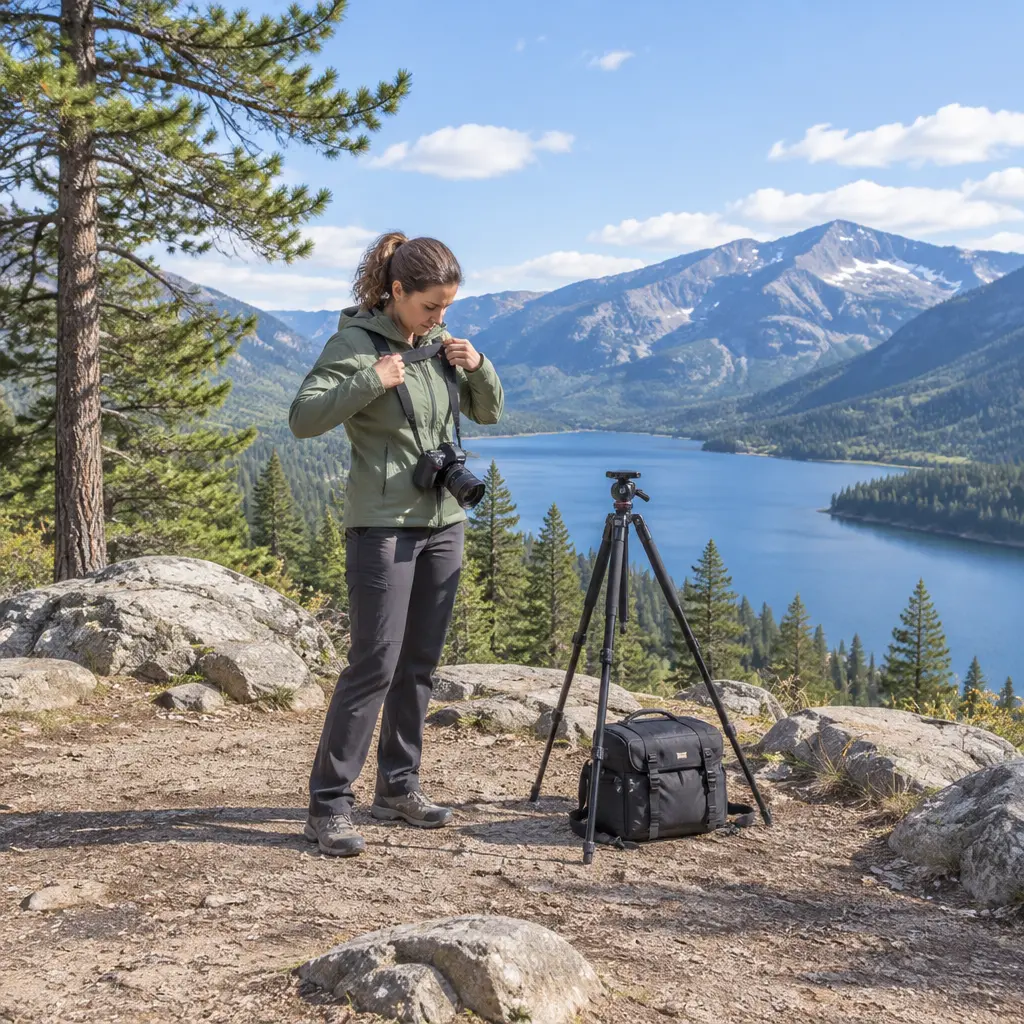
A travel tripod is a portable three-legged camera support, usually designed to fold down smaller than a studio or landscape model. It can help keep framing consistent and reduce camera movement during long exposures, although a tripod does not prevent motion in the subject. Compare folded length, weight, maximum load, leg locks, and head compatibility. The manufacturer’s load rating is a useful screening specification, not a guarantee of stability in strong wind or on uneven ground.
A tripod can be unnecessary for travelers who mostly photograph in daylight or move quickly between locations. In those cases, a wall, railing, or stable surface may be enough when safe and permitted. Never leave a tripod unattended in a public place, and follow site rules: some museums, parks, and viewpoints restrict tripods or require a permit for their use.
Mini tripods, clamps, and beanbags offer lighter support
A mini tripod is a small tabletop support, while a clamp grips an approved surface and a beanbag can stabilize a camera on a ledge or other safe platform. These options are easier to pack than many full-size tripods, but they have limits in height, positioning, and load capacity. Use a clamp only on a secure surface that will not be damaged, and avoid placing gear where it could fall or obstruct others.
Camera power and storage accessories protect shooting time
Power and storage accessories keep a camera operating and preserve the images it records. Batteries and memory cards are small compared with many camera accessories, yet forgetting either can stop a shoot. Their capacity and compatibility must match the camera, the expected shooting volume, and access to charging or backup options.
Spare camera batteries reduce dependence on charging access
A spare battery is a compatible rechargeable power source that lets a photographer continue shooting while another battery is depleted or charging. Battery life varies with camera model, temperature, screen use, wireless functions, video recording, and shooting habits, so a manufacturer’s rated figure should be treated as a test-based estimate rather than a promise for every trip. Carry batteries in protective cases, and use chargers and power banks that meet the camera maker’s specifications.
Lithium batteries are subject to transport rules. The U.S. Federal Aviation Administration advises passengers to keep spare lithium batteries in carry-on baggage, with terminals protected against short circuits; airline and international rules may add restrictions. Check current guidance for your route and the watt-hour rating of your batteries before departure.
Memory cards provide capacity and a first layer of backup
A memory card stores photographs and video in the camera. Buy a card type and speed class supported by your camera, especially if you record high-resolution video or shoot bursts. Carrying more than one card can reduce the risk of running out of space, but it does not itself create a backup. Keep used cards in a separate case and avoid formatting them until the files have been copied and checked in at least one other location.
Card readers and portable storage make backups more practical
A card reader transfers files from a memory card to a laptop, tablet, or compatible storage device. A portable SSD can hold copies without relying on an internet connection, while cloud backup may be useful when reliable connectivity is available. For important work, maintain separate copies rather than treating a single card or drive as safe storage. Test your reader and backup workflow at home before relying on it during a trip.
Camera protection accessories guard against weather and handling
Camera protection accessories help reduce exposure to rain, dust, scratches, and accidental impacts. Protection is especially relevant when moving between climates or shooting outdoors, but no accessory makes equipment invulnerable. Use the camera manufacturer’s care instructions and check whether your specific camera and lens are weather-sealed; resistance ratings and seals differ by product.
Rain covers shield cameras in wet conditions
A rain cover is a waterproof or water-resistant sleeve that covers a camera and lens while leaving controls accessible. A purpose-made cover is generally easier to handle than an improvised plastic bag, although both require care around openings and seams. Pack a small cover if rain is plausible, and dry equipment gradually after exposure rather than storing damp gear in a closed bag.
Protective filters and lens hoods help protect the front element
A lens hood blocks some stray light and can help shield the front of a lens from light bumps or drizzle. A clear protective filter adds a replaceable barrier over the lens, but it can introduce reflections or reduce image quality in some conditions, particularly if it is dirty or poorly made. Use a filter when its protection is useful for your environment, and remove it if unwanted flare or reflections appear.
Cleaning kits keep lenses and sensors usable
A basic cleaning kit commonly includes a blower, a clean microfiber cloth, and lens-safe cleaning fluid. A blower can remove loose dust without rubbing the glass; a cloth is for gentle cleaning when needed. Avoid using clothing or household cleaners on lens coatings. Sensor cleaning is more delicate, so follow the camera maker’s instructions or use a qualified service if you are unsure.
Camera convenience accessories expand shooting options
Convenience accessories address specific creative or practical tasks, such as controlling glare, composing from a distance, or keeping small parts together. They are useful additions after core needs—carrying, support, power, storage, and protection—have been covered. A lightweight accessory that enables a planned shot can be more valuable than a collection of rarely used extras.
Remote releases reduce camera movement and enable self-portraits
A remote release triggers the shutter without touching the camera. Wired, wireless, and phone-based options can help with tripod-mounted long exposures, group photographs, and self-portraits. Check compatibility with your camera and test pairing or batteries before leaving. A camera’s built-in timer can replace a separate remote for many simple situations.
Filters control light and reflections in selected situations
Photographic filters attach to a lens and alter the light reaching the sensor. A circular polarizing filter can reduce certain reflections and deepen blue skies when used at a suitable angle; a neutral-density filter reduces light for longer exposures in bright conditions. Filter size must match the lens or use an appropriate adapter. These tools are not essential for every trip, so choose them for a specific photographic goal and learn their effects before relying on them.
Small organization tools prevent avoidable delays
A compact pouch, labeled battery case, and a few cable ties or hook-and-loop straps can keep chargers, cards, and cables organized. This is a simple but effective way to reduce time spent searching through a bag. Keep frequently needed items together, but separate used memory cards and charged batteries from empty or unverified ones to avoid mistakes.
Camera accessory packing should match the trip
A practical packing list starts with the camera and lens, then adds accessories according to likely conditions. Use the following examples as starting points, not fixed rules:
- For a city break: comfortable strap, compact bag, spare battery, extra memory card, and a small cleaning cloth.
- For hiking: supportive carry system, rain cover, spare battery, card case, and a lightweight tripod only if the planned images require one.
- For night photography: stable tripod, remote release or timer, spare batteries, and sufficient memory-card capacity.
- For beach or dusty environments: sealed storage, a cover, a blower, and careful lens-changing practices.
Pack the camera so it is protected but not buried beneath items you need during the day. Before departure, confirm that batteries charge, cards work, straps lock, and tripod plates fit. The Leave No Trace Center for Outdoor Ethics emphasizes planning ahead and respecting natural places; in practice, that means staying on permitted routes, avoiding disturbance to wildlife, and leaving fragile locations undamaged while photographing them.
Conclusion: Camera accessory choices should support the journey
The best camera accessories for travel photography are the ones that solve real problems for your itinerary. Carrying accessories make gear easier to use; tripods and smaller supports steady selected shots; batteries, cards, and backup tools protect shooting time and files; and weather covers and cleaning supplies help manage exposure to the elements. Remote releases, filters, and organization tools are worthwhile when they support a specific need.
Start with a compact, compatible kit, test it before traveling, and add specialized equipment only when your subjects or conditions call for it. Check camera and accessory specifications, airline battery guidance, and local site rules before departure. Then spend less time managing gear and more time making photographs.
Sources: Federal Aviation Administration, PackSafe—Portable Electronic Devices and Batteries, https://www.faa.gov/hazmat/packsafe/portable-electronic-devices-with-batteries; Canon, Camera Care, https://www.usa.canon.com/learning/training-articles/training-articles-list/caring-for-your-camera; Leave No Trace Center for Outdoor Ethics, The Seven Principles, https://lnt.org/why/7-principles/; SanDisk, Memory Card Compatibility and Speed Classes, https://www.sandisk.com/solutions/memory-cards; Peak Design, Capture Camera Clip, https://www.peakdesign.com/products/capture