
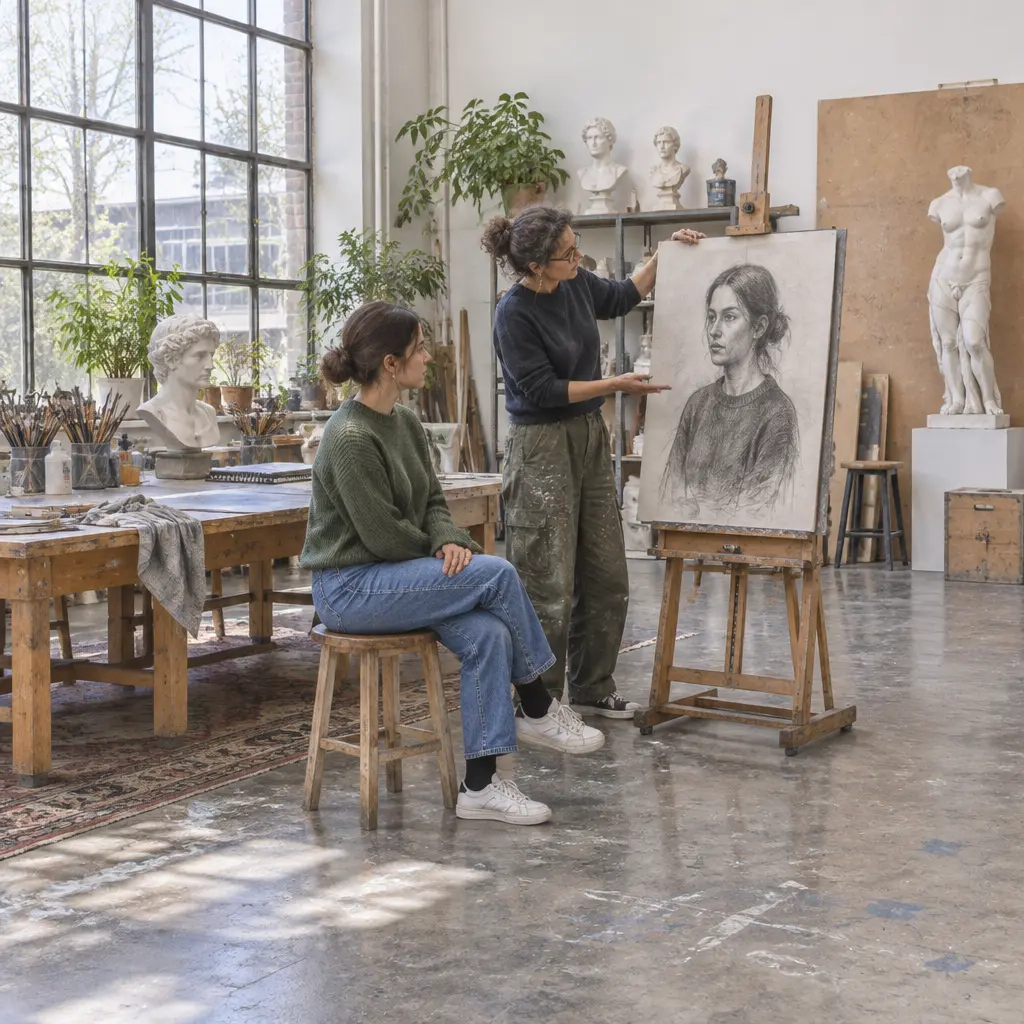
Representing another person in fine art means making choices about how their likeness, identity, and experience appear in an artwork. Ethical representation is not simply a matter of obtaining permission: it also involves power, context, dignity, privacy, and how an image may be interpreted or circulated. These questions matter in a world where images travel widely and where people have unequal control over their portrayal. A responsible approach considers consent and collaboration, the risks of stereotyping or appropriation, the artist’s obligations after publication, and practical examples such as documentary photography and portraiture.
Ethical representation and the artist’s responsibilities
There is no single, universally accepted definition of “ethical representation” in fine art. For this article, it means portraying a person with due attention to their agency, circumstances, and dignity, while being accountable for the artistic choices and consequences involved. The American Anthropological Association’s ethics guidance emphasizes avoiding harm, obtaining informed consent where appropriate, and considering responsibilities to the people represented. Although written for anthropological practice, these principles offer a useful framework for artists as well.
Ethical questions arise across related forms of practice: commissioned portraiture, documentary and street photography, self-portraiture, performance, archival reuse, and collaborative or community-based art. The relevant standards differ by context. A paid portrait commission, for example, usually involves a clearer agreement than an image made in a public place, but neither situation removes the artist’s responsibility to consider privacy, power, and likely use.
Consent, permission, and legal rights
Consent is a person’s informed, voluntary agreement to participate in a particular artistic process or use of their image. Permission is often narrower: it may authorize a specific photograph, exhibition, or publication without covering every later use. Ethical practice makes the scope clear, including whether an image may be edited, sold, exhibited online, or used in promotion. Consent can also be revisited when a project changes substantially.
Legal requirements depend on jurisdiction and circumstances. In the United States, the First Amendment and state privacy and publicity laws can affect image-making and publication; copyright in a photograph is generally distinct from the depicted person’s rights. The U.S. Copyright Office explains that copyright ordinarily protects the photographer’s original image, not a person’s likeness as such. That distinction does not settle the ethical question: an image may be legally publishable while still exposing, misrepresenting, or exploiting its subject. Artists should seek qualified legal advice for projects involving sensitive contexts, commercial use, minors, or identifiable private individuals.
Power, collaboration, and agency
Agency is a person’s ability to shape decisions affecting their portrayal. It may include discussing pose, setting, captions, anonymity, editing, and the audience for the work. Collaboration does not require giving a sitter final control over every artistic choice; it does require being candid about the artist’s aims and listening seriously to concerns. The balance is especially important when artists have greater access to galleries, funding, or media than the people they depict.
The National Association of Photographers of America’s ethical guidance and the Society of Professional Journalists’ Code of Ethics both stress accuracy, minimizing harm, and treating subjects with respect. These are not identical to fine-art standards, but they clarify useful questions: What does the subject understand? Who benefits from the image? Could its circulation create foreseeable harm? Is the work presenting a person as a complex individual or reducing them to a symbol?
Ethical representation in different artistic practices
Consent and agency provide a foundation, but their application changes with genre. A carefully staged studio portrait, an unposed street photograph, and an artwork made from historical records do not create the same relationship between artist and subject. The following categories show how ethical responsibilities shift across common practices.
Portraiture and commissioned work
Portraiture represents a person through selected features, pose, setting, and expression. In a commission, the artist and sitter can usually discuss expectations before work begins: the intended style, whether the portrait will be displayed publicly, and whether reproductions or commercial uses are planned. A written agreement can reduce misunderstanding without replacing ongoing communication.
A portrait may depart from literal likeness and still be respectful, but artists should distinguish deliberate interpretation from claims about the sitter’s character or identity. Captions and exhibition texts matter: a person described only through a diagnosis, occupation, or social category may be flattened even when the image itself is sensitive. Clear attribution and accurate context help preserve the sitter’s individuality.
Documentary, street, and photojournalistic art
Documentary work presents people in real-world situations, often without the controlled conditions of a commission. Being in a public space does not automatically make every photograph ethically harmless. Images of grief, illness, poverty, protest, or vulnerability may expose people to stigma or unwanted attention, particularly when paired with identifying details or widely shared online.
The World Press Photo Foundation’s ethics guidance calls for truthful representation and respect for subjects, while recognizing that difficult circumstances can make consent complicated. Artists can reduce risks by explaining their project when feasible, avoiding misleading edits or captions, withholding identifying information when needed, and considering whether publication serves a meaningful purpose. The National Center for Missing & Exploited Children reports that its CyberTipline received 36.2 million reports of suspected child sexual exploitation in 2023; this is not a measure of art-related harm, but it underscores why identifiable images of children require particular care and safeguarding.
Representation across culture and identity
Cultural representation involves portraying people whose histories, communities, or identities may differ from the artist’s. Ethical concerns include stereotyping, appropriation, and treating a community as a single voice. The Smithsonian’s National Museum of the American Indian developed its “Protocols for Native American Archival Materials” to encourage respectful stewardship and access to Indigenous cultural materials. The protocols are not a universal rulebook for all art, but they demonstrate why consultation, community context, and attention to cultural authority can matter when using images or knowledge tied to a living community.
Artists can examine who is being represented, who is absent, and whether familiar visual conventions reproduce unequal power. Consultation should be meaningful rather than symbolic: invite relevant perspectives early, compensate collaborators where appropriate, and be transparent about what feedback can change. No individual should be expected to speak for an entire identity group.
Archival images, reuse, and digital circulation
Archival art repurposes existing photographs, documents, or recordings, sometimes long after their subjects can provide consent. An image’s public availability does not make every reuse ethically neutral. Artists should investigate how it was created, whether the subject was aware of its original purpose, and whether new presentation could reveal sensitive information or alter its meaning.
Digital circulation adds another layer because images can be copied, decontextualized, and redistributed beyond the artist’s control. The Pew Research Center’s 2023 survey found that 41% of U.S. adults had experienced online harassment, illustrating the wider risks of networked exposure, though the statistic does not specifically measure harm caused by art. Artists can provide context, avoid unnecessary personal details, consider access restrictions for sensitive material, and respond responsibly if a subject raises a credible concern.
Practical methods for making and showing work responsibly
Ethical intentions are most useful when translated into routine decisions. A project plan can help artists identify risks before images are made or exhibited, rather than treating consent and harm as questions to address only after a complaint.
Before making the work
- Explain the project, intended audience, likely venues, and foreseeable online or commercial uses in plain language.
- Clarify what participation involves and whether the person can decline, pause, or withdraw before a stated stage.
- Consider age, capacity, language access, privacy, safety, and the potential consequences of identification.
- Agree on practical matters such as compensation, credit, anonymity, and contact arrangements.
- For community or archival projects, research relevant history and consult appropriate people before making or publishing sensitive material.
During editing, interpretation, and exhibition
- Do not use captions or edits that create a false impression of what a person said, did, or experienced.
- Review whether cropping, sequencing, titles, and display choices reinforce stereotypes or expose someone unnecessarily.
- Provide context that distinguishes the artist’s interpretation from factual claims about the subject.
- Consider whether a subject should review identifying or sensitive details, while clearly explaining the limits of that review.
- Keep records of permissions and agreements, and revisit them if the work’s purpose or distribution changes.
These steps do not guarantee universal agreement: artists and subjects may reasonably disagree about meaning or artistic control. They do create a more transparent basis for decisions and make it easier to identify preventable harm. A useful visual aid for a studio or classroom is a decision-flow chart showing the path from project purpose to consent, risk review, editing, publication, and post-publication response.
Conclusion: representation as an ongoing relationship
Ethical representation in fine art combines informed consent, attention to power, cultural and contextual awareness, and responsibility for an image’s circulation. Portraiture, documentary practice, cultural representation, and archival reuse each raise distinct questions, but all require artists to consider the person behind the image. Legal permission is not the same as ethical care, and a one-time agreement cannot anticipate every later use.
Artists, educators, and institutions can strengthen practice by explaining intentions, inviting meaningful collaboration, minimizing foreseeable harm, and providing accurate context. Before beginning a project, use the questions in this article to review who controls the image, who may be affected by it, and what accountability will look like after exhibition. Further reading in the American Anthropological Association’s ethics guidance, the Smithsonian’s Indigenous archival protocols, and professional photography ethics codes can help tailor decisions to a project’s setting.
Sources: American Anthropological Association, Principles of Professional Responsibility, https://americananthro.org/learn-teach/ethics/; U.S. Copyright Office, Copyright Basics, https://www.copyright.gov/circs/circ01.pdf; Society of Professional Journalists, SPJ Code of Ethics, https://www.spj.org/ethicscode.asp; World Press Photo Foundation, Code of Ethics, https://www.worldpressphoto.org/contest/2024/code-of-ethics; National Center for Missing & Exploited Children, 2023 CyberTipline Reports, https://www.missingkids.org/gethelpnow/cybertipline/cybertiplinedata; Smithsonian Institution, Protocols for Native American Archival Materials, https://www2.nau.edu/libnap-p/protocols.html; Pew Research Center, The State of Online Harassment, 2023, https://www.pewresearch.org/internet/2023/01/11/the-state-of-online-harassment/
