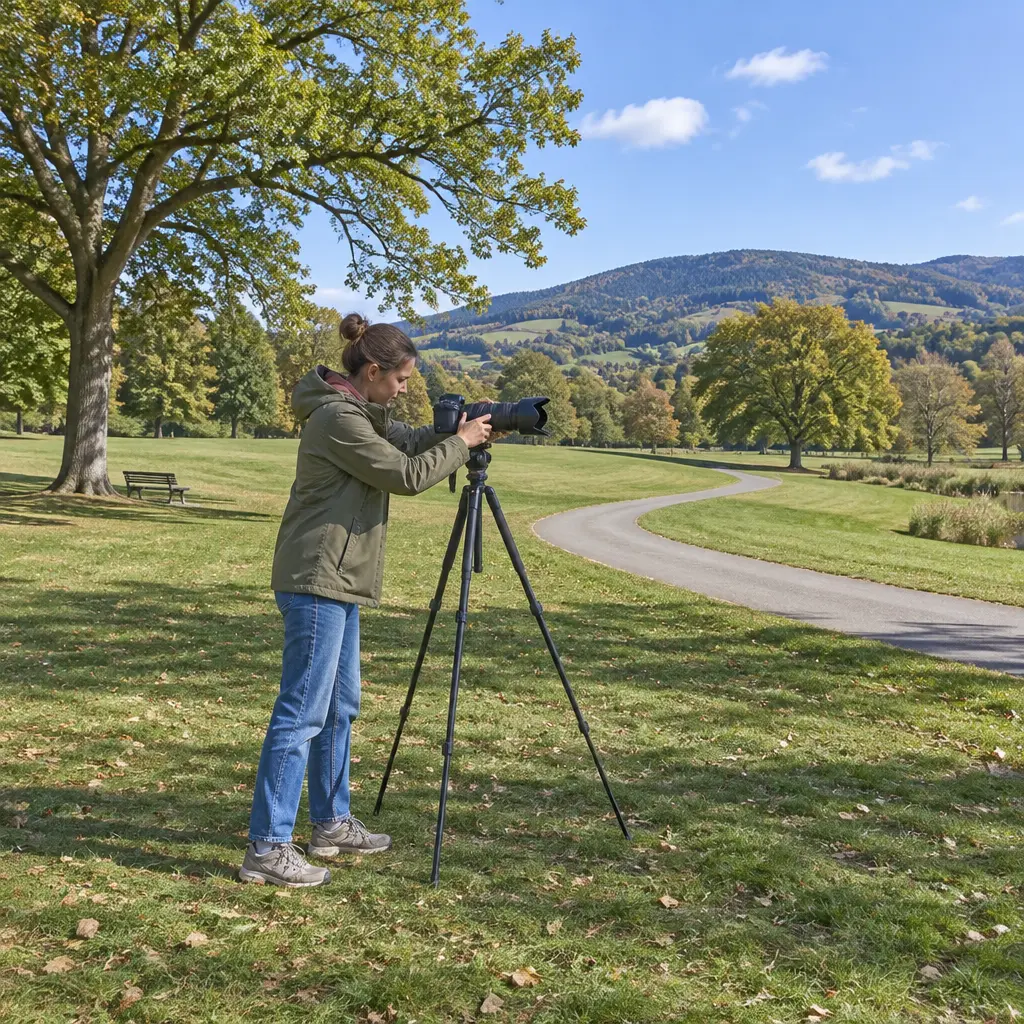
A camera lens is an optical assembly that gathers and focuses light onto a recording surface; its focal length, field of view, and optical design shape how a scene appears. Lens choice affects perspective, framing, depth of field, and the emotional tone of an image—not because a lens independently changes a viewer’s feelings, but because it changes visual relationships that viewers interpret. A wide-angle lens can exaggerate near-to-far distances, while a telephoto lens compresses them; aperture and focus influence background blur. These effects matter in filmmaking, photography, journalism, and visual communication, where perspective can make a subject feel intimate, imposing, isolated, or connected to its surroundings.
Lens Choice and Perspective: Focal Length, Distance, and Framing
Perspective describes the apparent spatial relationship among objects in an image, especially how their size and position change with distance from the camera. A key distinction is that camera position determines perspective directly, while focal length determines the angle of view and therefore how much of the scene fits in the frame. In practice, photographers often change camera distance when switching lenses to keep a subject the same size; that change in distance is what produces the familiar wide-angle and telephoto perspective differences.
Wide-angle lenses: expansive space and pronounced depth
A wide-angle lens has a shorter focal length and a broader angle of view than a standard lens for the same camera format. It can include more of a room, landscape, or nearby environment. When the camera is close to a subject, objects nearer the lens appear disproportionately large relative to objects behind them, making spatial depth feel pronounced. This is useful for environmental portraits and immersive scenes, but close positioning can distort facial proportions. The effect is often associated with energy, urgency, or an unstable feeling, though those impressions depend on composition and context rather than the lens alone.
Telephoto lenses: compressed space and selective attention
A telephoto lens has a longer focal length and a narrower angle of view. It magnifies distant subjects within the frame, making it useful for sports, wildlife, portraits, and situations where the camera cannot approach. When the photographer moves farther away to preserve the subject’s framing, near and far objects appear more similar in size and closer together. This visual compression can make a background feel crowded or make a subject appear detached from its surroundings. Telephoto framing can also simplify a scene by excluding distracting elements, supporting a quieter or more observational mood.
Normal lenses: a moderate view of the scene
A normal lens offers an angle of view that is often considered comparatively natural for a given camera format. “Normal” is format-dependent: a focal length that behaves normally on a full-frame camera may be telephoto on a smaller sensor. A commonly used approximation for a normal lens is a focal length near the sensor’s diagonal measurement. This category is valued for adaptable framing and relatively unobtrusive perspective when the camera is positioned at a typical viewing distance. It is not a guarantee of a human-eye match; human vision combines eye movements, attention, and processing in ways a single photograph does not.
Lens Choice Shapes Mood Through Depth of Field and Composition
Perspective establishes spatial relationships, while depth of field and framing guide attention within those relationships. The American Society of Cinematographers’ technical resources describe focal length, camera format, focus, and aperture as connected factors in image-making. A lens choice therefore works best as part of a system: camera distance sets perspective, focal length determines framing, and aperture and focus help decide what remains visually prominent.
Aperture and background blur
Aperture is the adjustable opening that controls how much light passes through a lens. It is commonly expressed as an f-number; a lower f-number represents a wider opening. A wider aperture can produce shallower depth of field, making the focused subject stand out against a softer background. This separation is often used to create intimacy or visual emphasis. A smaller aperture generally increases the range that appears acceptably sharp, helping retain detail across a landscape or group. Depth of field also depends on focus distance, focal length, sensor format, and viewing conditions, so aperture alone does not determine blur.
Framing, distortion, and emotional interpretation
Framing is the selection of what the image includes and excludes. A wide field of view can place a person within a large environment, communicating vulnerability, freedom, or context; a tight telephoto frame can isolate a face or detail, suggesting concentration or confinement. Lens distortion is another consideration. Some wide-angle lenses visibly bend straight lines near the frame edges, while perspective distortion from close camera placement can enlarge nearby features. These are visual properties, not fixed emotional meanings: lighting, subject expression, camera height, movement, and cultural context also influence interpretation.
Sensor size and equivalent focal length
A lens’s focal length is a physical property, but its field of view depends on the sensor or film format behind it. A smaller sensor records a narrower portion of the projected image than a larger sensor using the same focal length. Photographers often describe this difference using “35 mm equivalent” focal length, which helps compare framing across formats. The Digital Photography Review glossary and camera manufacturers’ technical guides explain this crop-factor convention. When comparing lens choices, consider both the stated focal length and the camera format rather than treating a millimeter value as a universal field-of-view description.
Lens Choice in Practice: Portraits, Landscapes, and Film Scenes
Different genres favor different combinations of perspective and mood, but no focal length is mandatory. A useful decision begins with the desired relationship between subject and environment, then accounts for working distance, available light, and the intended audience. The examples below show how lens characteristics translate into practical choices.
Portraits: balance facial perspective and background
For a close portrait, stepping back and using a longer focal length can help avoid the enlarged-nose effect associated with shooting very close on a wide lens. A moderate telephoto view can also make it easier to isolate a subject with background blur. Environmental portraits may instead use a wider lens, provided the camera is not so close that facial proportions become distracting. The photographer should choose a working distance that feels comfortable for the subject and test how the background changes with camera position.
Landscapes and architecture: control depth and lines
Wide-angle lenses are useful when a scene’s foreground and surroundings are essential to its meaning. Placing a strong foreground element near the camera can create a pronounced sense of depth. For architecture, however, tilting the camera upward may cause vertical lines to converge; a level camera, perspective-control lens, or later correction can reduce that effect. A longer lens can also be effective for landscapes, compressing layers of hills or buildings into a dense pattern rather than presenting a broad panorama.
Film and documentary: mood as a sequence of choices
In moving images, lens choice affects not only individual frames but also continuity between shots. A director may use a wide lens close to an actor to create immediacy, then cut to a longer lens that flattens the background and visually separates the character. Documentary filmmakers may select a longer lens to record events from a respectful distance, while accepting the compressed spatial appearance it creates. These choices should be evaluated alongside camera movement, editing, lighting, and sound; a lens contributes to mood but does not determine it by itself.
How to Choose a Lens for the Intended Perspective and Mood
A practical lens decision can be made by testing the scene rather than relying on focal-length stereotypes. First decide whether the image should emphasize the subject’s surroundings or separate the subject from them. Next choose a camera position that gives the desired perspective, then select a focal length that frames the scene from that position. Finally, set focus and aperture for the required depth of field and check the edges of the frame for distortion or unwanted distractions.
- Choose a wide-angle view when spatial context, foreground depth, or an expansive field of view matters.
- Choose a telephoto view when distance, tighter framing, or visual compression serves the scene.
- Use a normal-range lens when flexible framing and a restrained perspective are priorities.
- Check camera format, because sensor size changes the field of view associated with a focal length.
- Review the image at its intended display size; apparent sharpness and blur depend partly on viewing conditions.
For a simple comparison, photograph the same subject from two positions: one close with a wide lens and one farther away with a longer lens, adjusting the framing so the subject occupies a similar portion of each image. The difference in relative size between foreground and background will make the role of camera position especially clear. A side-by-side comparison chart could label camera distance, focal length, angle of view, background appearance, and the mood the photographer intends—while noting that mood remains interpretive.
Conclusion: Perspective and Mood Depend on More Than Focal Length
Lens choice shapes perspective and mood through linked decisions about camera distance, focal length, field of view, aperture, focus, and framing. Wide-angle lenses can emphasize depth and surroundings; telephoto lenses can narrow the view and compress spatial relationships; normal lenses offer a versatile middle ground. These are tendencies, not rules. To make more intentional images, test different camera positions and focal lengths, consider the sensor format, and judge the result in context. Further reading in cinematography and photographic optics can help connect technical choices with the visual meaning of an image.
Sources: American Society of Cinematographers, The American Cinematographer Manual, https://theasc.com/; Digital Photography Review, Glossary: Crop Factor, https://www.dpreview.com/; Cambridge in Colour, Understanding Camera Lenses, https://www.cambridgeincolour.com/tutorials/camera-lenses.htm; Nikon, Understanding Focal Length and Field of View, https://www.nikonusa.com/learn-and-explore/c/tips-and-techniques/understanding-focal-length; Canon, Depth of Field, https://www.usa.canon.com/learning/training-articles/training-articles-list/depth-of-field