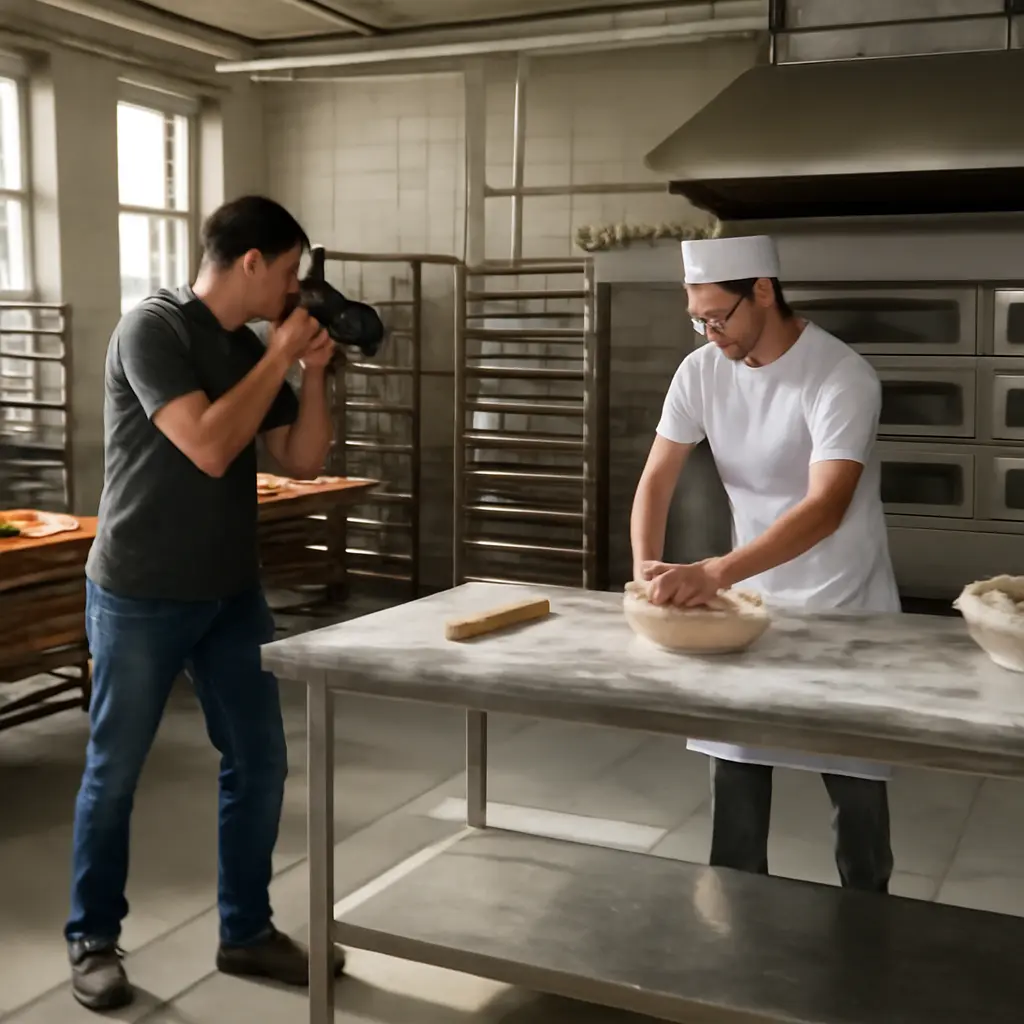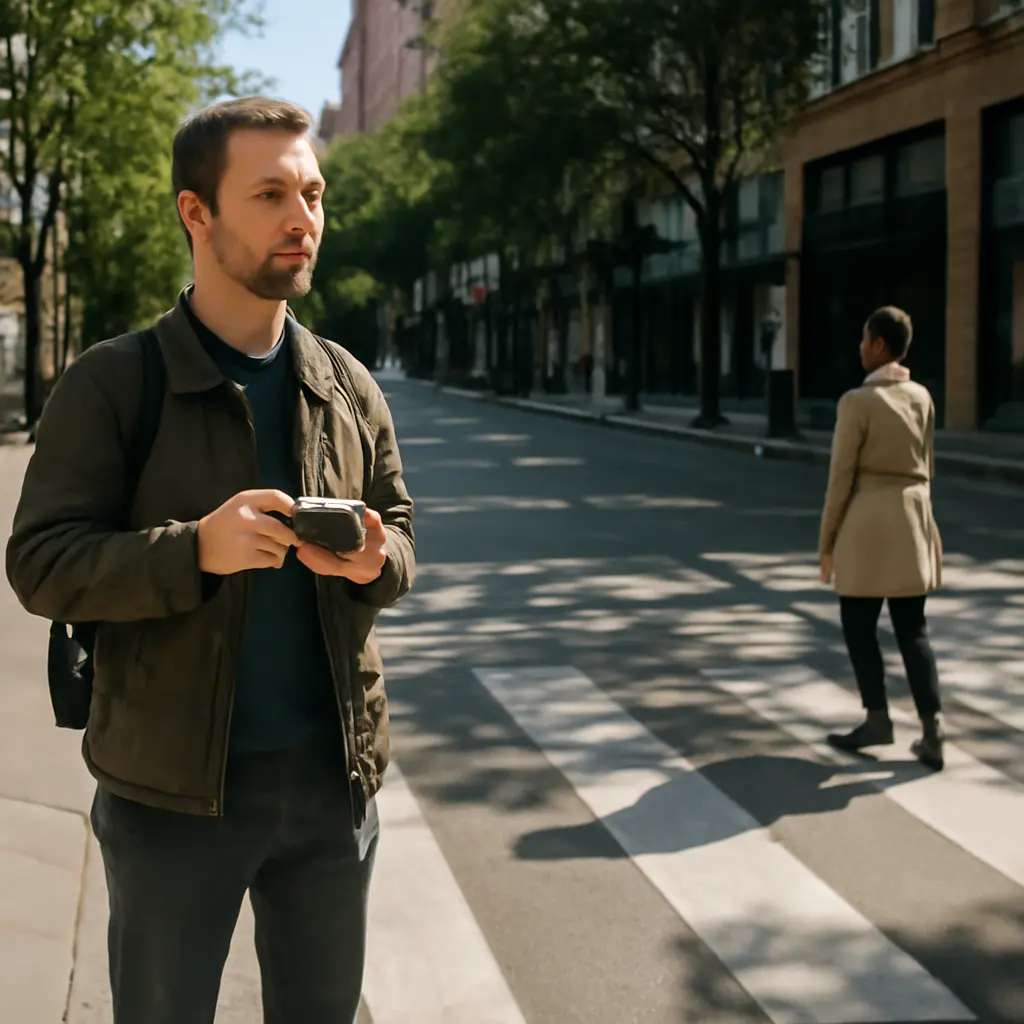
Street photography is the practice of making photographs in public spaces to observe and interpret everyday life. It is not primarily a contest in cameras or lenses: it is the ability to notice gesture, light, timing, relationships, and the small moments that give a place character. Henri Cartier-Bresson’s idea of the “decisive moment” captures this emphasis on perception and timing. Equipment still matters for reliability and comfort, but a compact, familiar camera—and thoughtful attention—can be enough. The distinction is practical: a 2023 survey by the Camera and Imaging Products Association recorded 7.9 million digital-camera shipments worldwide, yet the availability of cameras does not itself teach anyone what to see.
Seeing defines the street-photography approach
Street photography has no single universally accepted definition. Museum and photographic histories generally use the term for candid or observational pictures made in public settings, where people, place, and ordinary events become the subject. The approach is less a prescribed camera setup than a way of paying attention: the photographer anticipates visual relationships, responds to chance, and frames a moment that communicates something beyond its literal subject.
That definition includes several related forms: candid portraits, urban landscape, documentary observation, architectural scenes with human presence, and the often humorous “street moment.” They differ in emphasis, but all depend on noticing. A costly lens can record detail; it cannot decide which detail matters.
Composition: noticing relationships in a frame
Composition is the arrangement of visual elements within the photograph. On the street, that means watching how a person aligns with a sign, how a shadow divides a wall, or how foreground and background create a visual joke or tension. Photographers can use edges, reflections, repeated shapes, negative space, and leading lines to guide attention without relying on elaborate gear.
A useful practice is to choose a background first, then wait for a person or gesture to complete the frame. This reverses the instinct to chase every interesting subject and helps reduce clutter. The result is not necessarily technically perfect; it is visually legible and intentional.
Timing: recognizing the moment before it passes
Timing is the ability to anticipate when movement, expression, and setting briefly form a meaningful arrangement. Cartier-Bresson popularized the decisive-moment idea through his writing and photographs, but anticipation is a skill that can be practiced: observe a busy crossing, notice repeated movement, and prepare for the next gesture rather than reacting only after it happens.
A fast camera can help capture a fleeting expression, but familiarity with the scene often matters more. Knowing where people are likely to enter the frame, when a bus will arrive, or how sunlight shifts across a street gives the photographer time to compose before the action occurs.
Light: reading conditions rather than buying solutions
Light shapes mood, depth, and visibility. Hard midday light can create sharp shadows and graphic contrast; overcast light softens faces; shop windows and streetlamps can create pools of illumination after dark. Learning to recognize these conditions expands photographic options without requiring additional equipment.
The practical lesson is to adapt exposure and position to the available light. Move a few steps, wait for a subject to cross a bright patch, or use shadow as a compositional element. A camera’s exposure controls are useful, but they work best when the photographer has first noticed what the light is doing.
Equipment supports street-photography seeing
Equipment is the set of tools used to make and preserve photographs: camera, lens, phone, storage, and any accessories. It affects handling, image quality, and the likelihood of getting a shot, but it does not supply intention. The best setup is therefore the one that is dependable, comfortable to carry, and familiar enough that operating it does not distract from observation.
Hyponyms of street-photography equipment include phone cameras, compact cameras, mirrorless cameras, and digital single-lens reflex cameras, as well as prime and zoom lenses. Each option involves trade-offs. A phone is discreet and always available; a compact camera offers dedicated controls in a small body; interchangeable-lens cameras provide flexibility but can add weight and complexity. The Camera and Imaging Products Association’s 2023 shipment data—7.9 million digital cameras worldwide—describes a market, not a measure of photographic skill.
Camera choice: prioritize familiarity and readiness
A street camera is a tool for quick, dependable response. Choose one that starts quickly, focuses reliably, and feels comfortable for a full walk. Before going out, learn how to adjust exposure compensation, autofocus, and image review without searching through menus. A camera left at home because it is heavy cannot help make a photograph.
Phone cameras can be effective for observing and documenting everyday life, especially when their discreetness helps the photographer blend into a setting. Dedicated cameras may offer more control over focal length, shutter speed, or low-light performance. Neither category guarantees stronger images; the relevant question is whether the tool serves the photographer’s working style.
Lens choice: use simplicity to strengthen attention
A lens determines the angle of view and affects how much of the scene appears in the frame. A fixed focal-length, or prime, lens encourages the photographer to work from a consistent viewpoint and move to compose. A zoom lens changes framing quickly and can be useful when position is restricted, but frequent zooming can become a substitute for deliberate placement.
There is no universally correct focal length for street photography. A wider view can include environmental context, while a narrower view can isolate a subject from a busy background. The useful discipline is to understand the lens already in hand and make conscious choices about distance and framing.
Settings and carrying: remove friction, not every limitation
Simple, prepared settings can reduce missed moments. Many photographers use aperture priority or shutter priority, automatic ISO within a chosen range, and continuous autofocus when subjects move. These are starting points, not rules: the right setting depends on light, movement, and the desired look. The aim is to spend less time troubleshooting and more time watching.
A light kit also supports longer, more attentive walks. Carry a charged battery and sufficient storage, and avoid accessories that do not solve a real problem. Equipment that is comfortable and ready can encourage practice; equipment obsession can instead postpone it.
Practice builds the street photographer’s visual judgment
Visual judgment develops through repeated observation, picture-making, and review. The photographer learns to recognize patterns, anticipate events, and distinguish a merely unusual scene from one whose elements form a coherent image. This process is more useful than repeatedly upgrading equipment because it improves decisions across cameras and settings.
A focused exercise: stay in one place
Choose one safe, public location and photograph it for 20 minutes without changing position. First study the light and background; then wait for people, shadows, or movement to complete the frame. Limiting movement encourages patience and makes it easier to see how small changes in gesture alter an image.
Edit for meaning, not just technical perfection
After a walk, compare frames and ask what each photograph communicates. Look for clear visual structure, expressive gesture, and a relationship between subject and setting. A technically sharp image may still feel empty, while a slightly imperfect frame may hold a revealing interaction. Editing teaches the photographer which observations are worth pursuing next time.
Respect people and local rules
Street photography takes place among people, so ethical judgment is part of the practice. Laws governing photography vary by country and location; private property, transit systems, protests, and restrictions on commercial use may involve different rules. Respect requests, avoid exploiting people in vulnerable situations, and consider whether publishing an image could expose someone to harm. The National Press Photographers Association’s ethics guidance emphasizes respect for subjects and avoiding intentional contributions to harm.
Conclusion: attention matters more than the camera
Street photography is a practice of seeing: composition organizes the frame, timing recognizes a fleeting relationship, and sensitivity to light gives the scene its visual character. Equipment supports those choices, but camera type and market statistics cannot measure a photographer’s attentiveness. Choose a reliable tool, learn it well, and spend more time observing than shopping. For further study, explore the work and writing of Henri Cartier-Bresson, compare photographers’ contact sheets and edits, and take a focused walk in which the only goal is to notice.
Sources: Camera and Imaging Products Association, “Digital Camera Shipments,” 2023, https://www.cipa.jp/stats/dc_e.html; Henri Cartier-Bresson, The Decisive Moment, Simon and Schuster, 1952; National Press Photographers Association, “Code of Ethics,” https://nppa.org/code-ethics.